Univ.-Prof. Dr. med. univ. Marko Konschake: Anatomy, Innovation and the Foundation of 3D Surgical Training Models
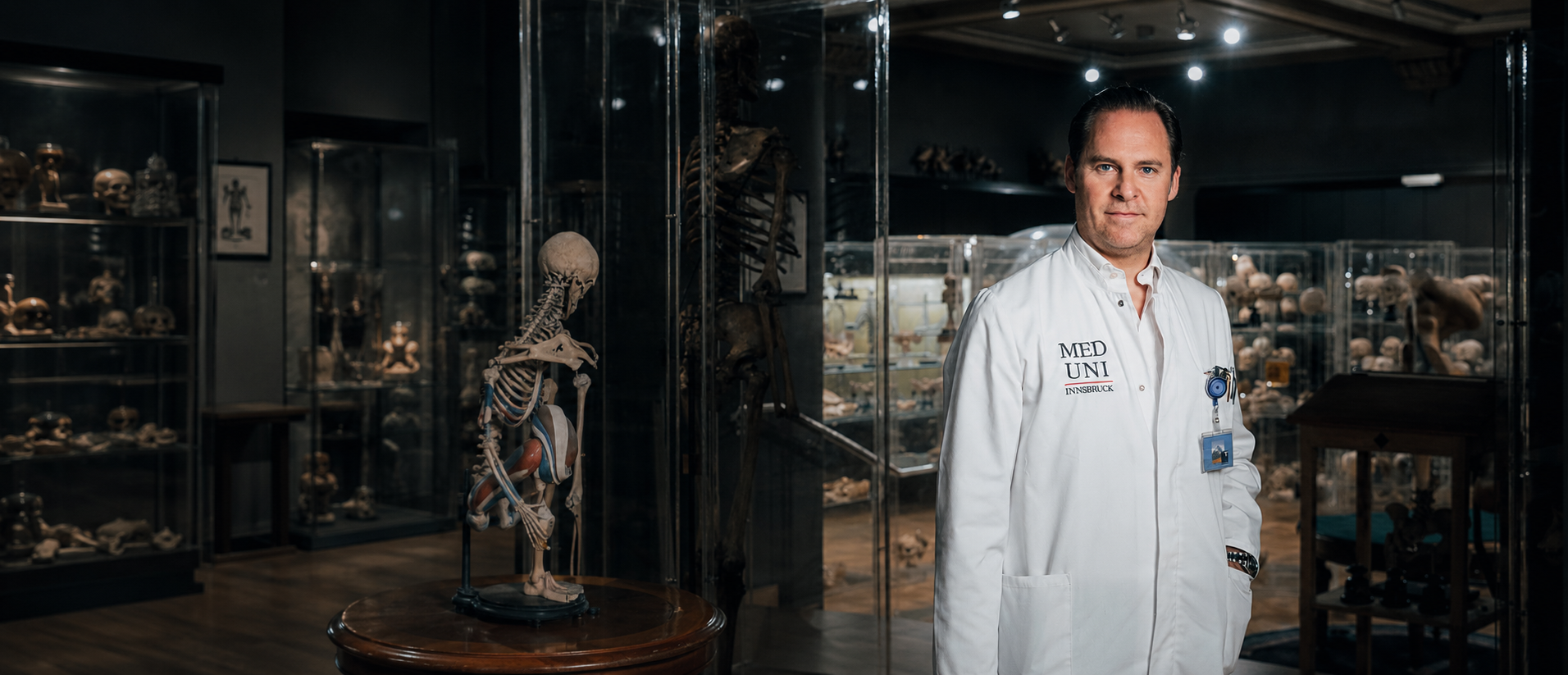
Univ.-Prof. Dr. med. univ. Marko Konschake
Successful eyelid surgery begins long before the first incision. It begins with a precise understanding of anatomy: tissue layers, nerves, vessels, ligamentous structures and the three-dimensional relationship between the eyelids, orbit and surrounding face. Univ.-Prof. Dr. med. univ. Marko Konschake brings exactly this anatomical perspective to the Lid Summit.
As a university professor in anatomy and director of the Institute of Clinical and Functional Anatomy in Innsbruck, Prof. Konschake represents a discipline that is essential for every surgeon working in the periocular region. His work connects surgical technique with anatomical precision, patient safety, innovation and structured medical education.
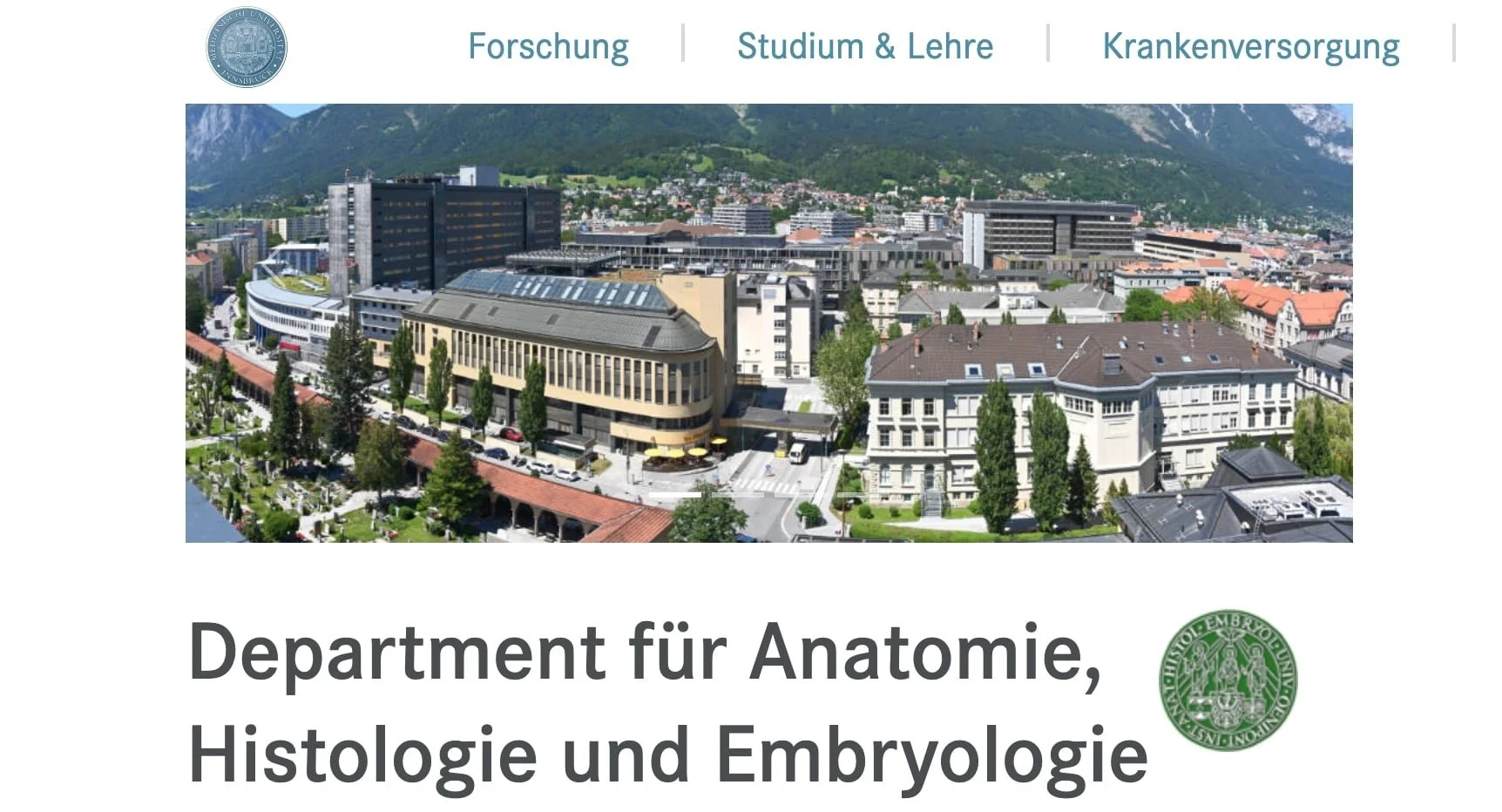
Institute of Clinical and Functional Anatomy
Director: Univ.-Prof. Dr. med.univ. Marko Konschake
Müllerstrasse 59, A-6020 Innsbruck
The anatomical basis of surgical innovation
The eyelid is a small anatomical region with a high functional and aesthetic impact. Millimetres can make the difference between a natural result and a visible imbalance, between stable eyelid function and postoperative problems.
For this reason, eyelid surgery depends on detailed knowledge of tissue layers, muscle function, innervation, vascular anatomy and structural support. Prof. Konschake’s anatomical expertise provides the foundation for translating these relationships into safer surgical practice and advanced training concepts.
From anatomy to complex 3D-printed surgical models
In 2022, Prof. Konschake and his institute helped lay the groundwork for developing complex 3D-printed surgical training models together with addion GmbH and eyecre.at GmbH. This collaboration made it possible to move from anatomical knowledge to realistic surgical simulation — a crucial step for creating advanced models for eyelid surgery training.
The development of the lid model was only possible because of the anatomical expertise of Prof. Konschake and his team, the institutional framework of the Institute of Clinical and Functional Anatomy, and the invaluable contribution of body donors. Their donation made it possible to study, understand and translate delicate anatomical structures into a new generation of surgical education models.
““Realistic surgical training starts with anatomy. Through the collaboration between our institute, [eyecre.at](http://eyecre.at/) GmbH and addion GmbH, we were able to translate anatomical knowledge — made possible through body donation — into a 3D-printed eyelid model that supports safer and more effective surgical education.””
The periocular region in context
The eyelids are not isolated structures. They are closely connected to the orbit, brow, forehead, cheek and midface. Changes in one area can influence tension, symmetry, expression and function in another.
This broader anatomical view is highly relevant for the Lid Summit. It supports an interdisciplinary approach in which ophthalmologists, oculoplastic surgeons, plastic surgeons, anatomists and medical technology partners work from a shared understanding of facial structure and function.
University teaching, publications and anatomical education
Prof. Konschake’s work connects medical education with clinically applied anatomy. Publications such as Peripheral Nerve Anatomy Revisited, Forensic Implications of Anatomical Education and Surgical Training With Cadavers, and studies on clinical-anatomical mapping for intraoperative neuromonitoring reflect this focus.
For eyelid and facial surgery, this is not only theoretical. It directly supports operative planning, complication avoidance and a deeper understanding of why specific techniques work, making anatomical education a central part of high-quality surgical training.
Relevance for eyelid and facial surgery
In the lid region, anatomical knowledge is essential for procedures involving upper eyelid correction, lower eyelid surgery, ptosis, canthal stability, reconstructive techniques and aesthetic facial procedures. Understanding the relationship between skin, muscle, fascia, fat compartments and ligamentous structures helps surgeons operate more precisely and more safely.
Prof. Konschake’s contribution to the Lid Summit lies in strengthening anatomy-based surgical decision-making. His perspective bridges textbook knowledge, cadaveric training, neuroanatomy, medical technology and real surgical application.
Interdisciplinary value for the Lid Summit
The Lid Summit is built around exchange between disciplines. While clinical experience and surgical technique are central, anatomy provides the common language that connects them. It allows specialists from different backgrounds to discuss the same structures with clarity and precision.
By bringing anatomical expertise and model-development experience into the conversation, Prof. Konschake adds a fundamental layer to the programme: a focus on structure, orientation, realistic training and safe surgical pathways in one of the most delicate regions of the face.
Conclusion
Univ.-Prof. Dr. med. univ. Marko Konschake contributes a vital anatomical and educational perspective to the Lid Summit. His expertise, his institute’s support and the essential role of body donation helped make the development of complex 3D-printed eyelid surgery models possible.
For a meeting dedicated to functional, reconstructive and aesthetic eyelid surgery, this perspective is indispensable. It supports safer procedures, better education and a deeper appreciation of the complex anatomy behind every successful result.
Univ.-Prof. Dr. med. univ. Marko Konschake
Director of the Institute of Clinical and Functional Anatomy
Medical University of Innsbruck
Innrain 35, 6020 Innsbruck
email: marko.konschake@i-med.ac.at