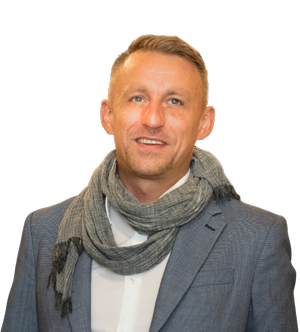
Ao. Univ.-Prof. Dr. Anton Schwabegger MSc

Ao. Univ.-Prof. Dr. Anton Schwabegger MSc, Leading Specialist and Deputy Director of The Department of Plastic, Reconstructive and Aesthetic Surgery at the Medical University of Innsbruck.
Few surgeons embody the full breadth of plastic, reconstructive, and aesthetic surgery like Ao. Univ.-Prof. Dr. Anton Schwabegger, MSc. With more than three decades at the University Clinic Innsbruck, over one hundred peer-reviewed publications, more than 150 international lectures, and a career spanning microsurgery, oncologic reconstruction, hand surgery, and facial surgery, he is one of Austria's most experienced and respected plastic surgeons.
For the Lid Summit, his presence on the faculty means participants learn from a surgeon who has spent a career reconstructing what disease, trauma, and congenital malformation have taken away, including in the most demanding region of all: the face and periorbital area.
A Career Built at the Innsbruck University Clinic
Prof. Schwabegger completed his medical degree at the University of Innsbruck in 1988 and trained as a specialist in plastic surgery at the University Clinic Innsbruck under the legendary Univ.-Prof. Dr. Hans Anderl, one of the pioneers of European plastic and craniofacial surgery, completing his specialist qualification in 1996.
In 1999 he received his venia docendi (university teaching qualification) and was appointed Associate University Professor under Univ.-Prof. Dr. Hildegunde Piza. From 2000 to 2008 he served as Managing Senior Physician of the University Clinic for Plastic, Reconstructive and Aesthetic Surgery Innsbruck, and has since held the position of First Deputy Director of the clinic. Since 2000 he has also served as consulting physician at the AUVA Rehabilitation Centre Bad Häring.
Within the clinic he has held several defining roles: Head of Medical Processes and Development, Team Leader of the working group for the treatment and surgery of congenital malformations, and permanent member of the soft tissue sarcoma tumour board. These positions reflect the two poles of his expertise: congenital reconstruction and oncologic surgery.
This is a career formed entirely within one of the German-speaking world's most respected plastic surgery departments, shaped by the teachers, cases, and academic culture that made Innsbruck a European reference centre for reconstructive surgery.
“Reconstruction means giving back what was lost: function first, form always. In the face, and especially around the eye, the two cannot be separated. Anyone who operates there carries responsibility for how a person sees, and how they are seen.”
Scientific Output: 100+ Publications and International Teaching
Prof. Schwabegger has authored more than one hundred scientific publications indexed on PubMed, covering nearly every area of plastic surgery, from microsurgical free tissue transfer and oncologic reconstruction to congenital chest wall deformities, on which he wrote the definitive English-language textbook on pectus excavatum and pectus carinatum (Congenital Thoracic Wall Deformities, Springer).
He has delivered over 150 lectures at international congresses across Europe, North America, and Asia, from Germany, England, and France to the USA, Canada, Singapore, Hong Kong, and Taiwan. He also serves on the Austrian Medical Chamber's examination academy for specialist examinations in Plastic, Reconstructive and Aesthetic Surgery, helping define the standard for the next generation of Austrian plastic surgeons.
His memberships span the leading societies of the field, including the Austrian Society for Plastic, Aesthetic and Reconstructive Surgery (ÖGPÄRC), EURAPS (European Association of Plastic Surgeons), and ESPRAS.
Reconstructive Mastery: Oncology, Trauma, and the Periorbital Region
Tumour surgery is one of Prof. Schwabegger's declared specialisations: the removal of skin cancers, soft tissue tumours, and sarcomas, followed by reconstruction of the resulting defects. As a permanent member of the Innsbruck soft tissue sarcoma tumour board, he has spent decades at the interface between oncologic clearance and functional restoration.
Nowhere is this discipline more demanding than in the eyelid and periorbital region, and nowhere is it more common. Basal cell carcinoma is the most frequent tumour of the periorbital area, and its excision is the single most common reason a surgeon will ever need to reconstruct an eyelid.
Periorbital tumour defects confront the surgeon with a unique set of simultaneous requirements: restoring a mobile, protective eyelid; preserving the tear film and corneal health; and achieving an aesthetic result in the most visually exposed part of the human body. The reconstructive literature confirms the complexity: eyelid reconstruction is considered one of the most challenging areas in reconstructive plastic surgery, where anatomy, function, and aesthetics interact like nowhere else in the body, and technique selection, from local flaps to grafts, must be tailored to every individual defect.
This is exactly the depth of reconstructive judgement Prof. Schwabegger brings to the Lid Summit's hands-on stations: decades of experience deciding not just how to close a defect, but which of the many available techniques serves the patient best.
Humanitarian Surgery: Burkina Faso, Niger, Guinea-Bissau, and India
Beyond the university clinic, Prof. Schwabegger has repeatedly volunteered for humanitarian surgical missions in Burkina Faso, Niger, Guinea-Bissau, and India, providing reconstructive surgery for children with severe facial disfigurements, including noma-related defects.
This work reflects the deepest purpose of reconstructive surgery: restoring function, dignity, and social participation to patients who would otherwise have no access to care. It also reflects the surgical versatility that only decades of broad reconstructive experience can build. Operating in resource-limited settings demands mastery of fundamental techniques and creative surgical problem-solving.
Expert Authority: Court-Certified and Trusted
Since 2002, Prof. Schwabegger has been a generally sworn and court-certified expert for plastic, reconstructive and aesthetic surgery, serving Austrian regional and district courts as well as insurance institutions in Austria and abroad. This role, reserved for the most trusted authorities in a specialty, speaks to a career-long reputation for rigour, fairness, and clinical judgement.
Alongside his university role, he has run his own practice at Medicent Innsbruck since 2013, covering the full spectrum of plastic, reconstructive and aesthetic surgery, including hand surgery (ÖÄK diploma) and facial procedures. Since 2022 his wife, Dr. Elisabeth Schwabegger, has also practiced there, with a focus on dermatosurgery and aesthetic treatments.
Why Prof. Schwabegger Is an Anchor of the Lid Summit Faculty
The Lid Summit teaches eyelid surgery from its anatomical foundations to advanced reconstructive techniques, and Prof. Schwabegger represents the reconstructive backbone of that curriculum. As a faculty member since the very first LidSUMMIT in 2025, he brings to the dissection stations what no textbook can: decades of operative decision-making in facial and periorbital reconstruction, refined across thousands of cases, humanitarian missions, and a career at one of Europe's leading university clinics.
For participants, learning from Prof. Schwabegger means understanding eyelid surgery as part of the larger reconstructive discipline it belongs to, where every flap, every graft, and every incision follows principles proven across the entire human body.
Conclusion
Ao. Univ.-Prof. Dr. Anton Schwabegger, MSc stands for plastic surgery in its most complete form: scientifically grounded, reconstructively versatile, internationally taught, and humanitarian in spirit. His decades at the Innsbruck University Clinic, the academic home of the Lid Summit, make him not just a faculty member, but part of the surgical tradition the course itself is built upon.
👉 Learn more about the Lid Summit | Prof. Schwabegger's practice
Sources & Further Reading
University Clinic for Plastic, Reconstructive and Aesthetic Surgery Innsbruck - Clinic Structure
Schwabegger, A. (Ed.) - Congenital Thoracic Wall Deformities - Springer
Lo Torto et al. (2017) - Surgical Treatment with Locoregional Flaps for the Eyelid: A Review - BioMed Research International