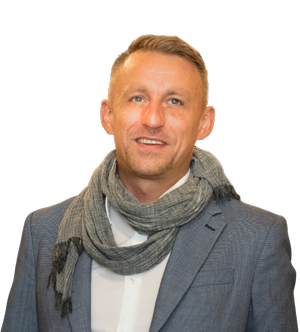
Dr. med. univ. Johanna Krapf

Reconstructive surgery of the eyelid demands a very particular skillset: the ability to restore not just appearance, but protection, movement, and ocular surface integrity - all within one of the most anatomically demanding and visually exposed regions of the face. Dr. med. univ. Johanna Krapf brings exactly this perspective to the Lid Summit.
She works at the Tirol Kliniken. Her research background lies in an area few surgeons ever touch: vascularised composite allotransplantation, the transplantation of living, functioning limbs.
Innsbruck: The Birthplace of European Hand Transplantation
To understand Dr. Krapf's surgical formation, it helps to understand where she trained.
In March 2000, the Medical University of Innsbruck performed Europe's first bilateral hand transplantation. Over the following years, five patients received bilateral hand, bilateral forearm, or unilateral hand transplants at the clinic - making Innsbruck one of the longest-running and most closely studied vascularised composite allotransplantation (VCA) programmes in the world.
Dr. Krapf is part of the team that has documented this work. She is a co-author of the comprehensive 20-year long-term outcome study of the Innsbruck hand transplant programme, published in Transplant International - an analysis covering rejection episodes, immunosuppression, graft function, and morphological changes across two decades of follow-up.
“Eyelid reconstruction is where plastic surgery and ophthalmology must speak the same language. You are rebuilding a structure that moves, protects, and faces the world - every layer and every decision matters for what the patient sees and how they are seen.”
Why Transplant Surgery Sharpens Eyelid Reconstruction
At first glance, hand transplantation and eyelid surgery seem worlds apart. In practice, they share the same fundamental problem: restoring a structure that must both function and be seen.
A transplanted hand is worthless if it does not move. An eyelid is worthless if it does not close. In both cases the surgeon works with composite tissue - skin, muscle, connective tissue, nerve, vessel — each layer with its own healing behaviour, each interface a potential point of failure. And in both, the aesthetic result is inseparable from the functional one, because both structures are permanently visible.
Surgeons formed in VCA develop a particular kind of thinking: layered anatomical reasoning, meticulous attention to tissue viability and vascular supply, and a deep respect for how healing behaves over months and years rather than days. These are precisely the habits that distinguish good eyelid reconstruction from adequate eyelid reconstruction.
The reconstructive literature reflects the same demands: eyelid reconstruction following oncologic resection requires simultaneous restoration of function and aesthetics, with technique selection guided by defect size, tissue availability, and individual anatomy — never by a fixed protocol.
Research Recognition: DAM Science Academy Award
Dr. Krapf's scientific work has been formally recognised at the highest level of German-speaking microsurgery. In 2018 she was among the award winners of the Science Academy of the Deutschsprachige Arbeitsgemeinschaft für Mikrochirurgie (DAM) - the trinational working group for microsurgery spanning Germany, Austria, and Switzerland.
Her publication record spans 11 peer-reviewed papers covering transplant immunology, rejection mechanisms, ischaemia-reperfusion injury, and long-term allograft outcomes. Note that her earlier work - including foundational studies on skin rejection in reconstructive transplantation - was published under her former name, Johanna Grahammer.
An Interdisciplinary Setting by Design
The Innsbruck University Clinic for Plastic, Reconstructive and Aesthetic Surgery operates within the Center of Operative Medicine, alongside transplant surgery, pathology, dermatology, neurology, and ophthalmology. The hand transplantation programme itself was only possible because those disciplines worked as one team.
This is the same collaborative logic the Lid Summit is built on: eyelid surgery done well requires ophthalmologists, plastic surgeons, and anatomists in the same room, working on the same anatomy from different angles. Dr. Krapf comes from a department where that collaboration is not aspirational - it is standard practice.
Why Dr. Johanna Krapf Belongs at the Lid Summit
The Lid Summit is designed for surgeons who want to understand eyelid surgery in its full functional, anatomical, and reconstructive depth. Dr. Krapf brings a reconstructive lens shaped in one of the most technically demanding fields in surgery: tissue viability, layered reconstruction, long-term healing behaviour, and the discipline of following outcomes over decades rather than weeks.
For participants, her perspective complements the oculoplastic and ophthalmologic expertise of the wider faculty - and reinforces the Lid Summit's core conviction that the best eyelid surgeons think across disciplines.
Conclusion
Dr. med. univ. Johanna Krapf is a clinician-researcher at the Tirol Kliniken whose background in vascularised composite allotransplantation gives her an unusually rigorous foundation for reconstructive work in the periorbital region. Recognised by the DAM Science Academy and part of the team documenting Europe's longest-running hand transplant programme, she represents the kind of faculty voice that makes the Lid Summit more than a techniques course - a genuinely interdisciplinary training experience.
For participants, his presence is a reminder that eyelid surgery never exists in isolation — it exists to serve, and protect, the remarkable transparent surface at the front of the eye.
👉 Learn more about the Lid Summit| Dr. Krapf on ResearchGate